
Why Knotweed Spreads So Fast in South London
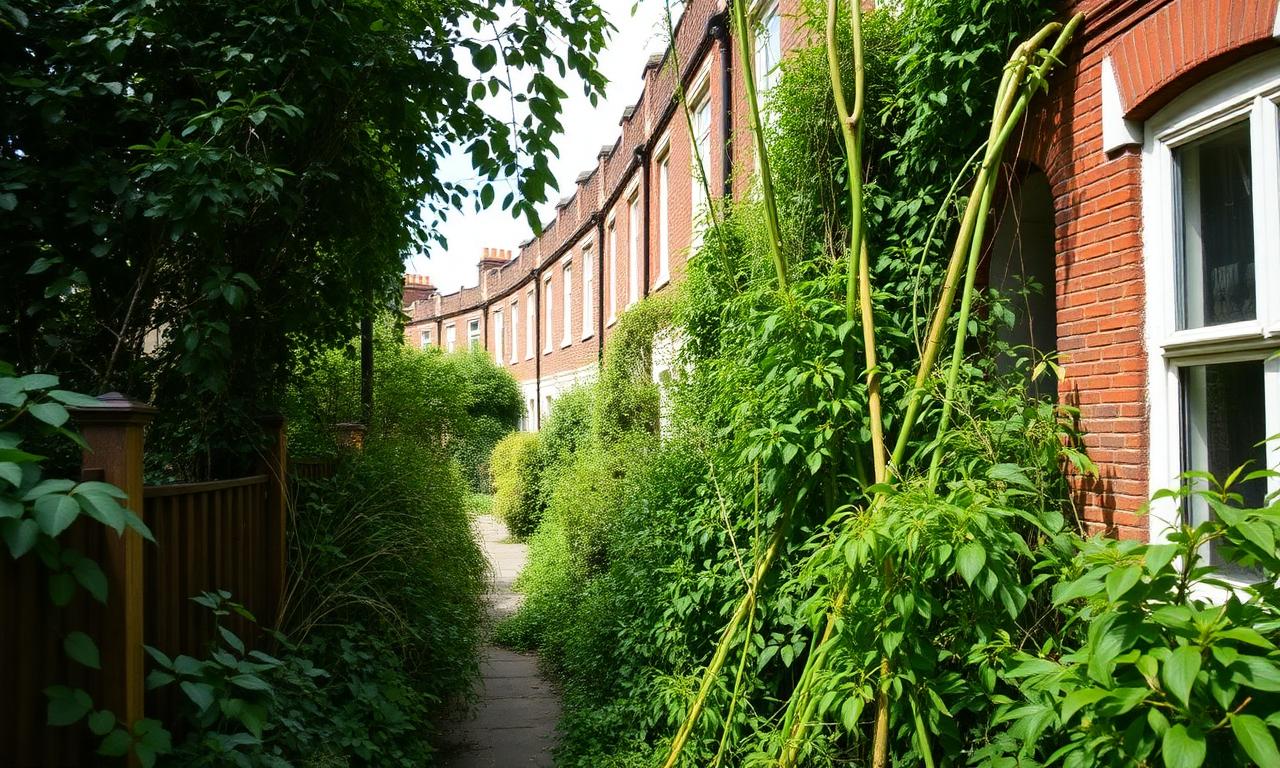
Surveyors working across Greater London consistently find higher knotweed densities in the south of the capital than the north. The reasons are part geological, part historical and part infrastructural, and understanding them helps south London property owners assess their own risk.
Clay Soil
South London sits on heavy London Clay across most of Wandsworth, Lambeth, Southwark, Lewisham and Croydon. Clay holds moisture deep into summer, and knotweed rhizome thrives in moist, dense soil.
The River Wandle and Tributaries
The Wandle, the Beverley Brook and the Pool River all run through south London and act as continuous knotweed corridors. Floodwater carries rhizome fragments downstream, seeding new infestations every winter.
Victorian Terrace Density
South London's Victorian terrace stock, long, continuous garden runs separated only by low fences, allows rhizome to spread laterally between gardens with no barrier.
Railway Corridors
The dense south London rail network, Southern, Southeastern, Thameslink, runs through cuttings and embankments that have been unmanaged for decades. These are reservoirs from which knotweed re-seeds adjacent gardens annually.
Historical Imports
Many south London gardens received imported topsoil during postwar reconstruction. Some of that topsoil came from contaminated sites, importing dormant rhizome that re-emerged decades later.